All content on this website is for informational purposes only, and is not intended to be a substitute for professional medical advice, diagnosis or treatment. If you have questions about your medical condition or treatment, always seek advice of your physician or other qualified healthcare professional.
Hypertension
Hypertension, also known as high or raised blood pressure, is a condition in which the blood vessels have persistently raised pressure. The higher the pressure, the harder the heart has to pump. (1)
Hypertension is a serious medical condition and can increase the risk of heart, brain, kidney and other diseases. It is a silent killer and a major cause of premature death worldwide. (1)
0 billion
adults aged 30–79 years worldwide had hypertension in 2024 (2)
0%
of adults with hypertension are unaware they have the condition (2)
What is blood pressure?
When the heart pumps blood through the arteries, the blood puts pressure on the artery walls. This is called blood pressure. Your blood pressure changes throughout the day based on your activities. (3)
Blood pressure is written as two numbers. The first (systolic) number represents the pressure in blood vessels when the heart contracts or beats. The second (diastolic) number represents the pressure in the vessels when the heart rests between beats. (2)
Normal blood pressure is less than 120/80 mm Hg. Your health care team can diagnose high blood pressure. They can also make treatment decisions by reviewing your systolic (first number) and diastolic (second number) blood pressure levels and comparing them to guidelines. (3)
The higher your blood pressure levels, the more risk you have for other health problems, such as heart disease, heart attack, and stroke. (3)
Blood pressure is measured using two numbers (2):
- The first number, called systolic blood pressure, measures the pressure in your arteries when your heart beats.
- The second number, called diastolic blood pressure, measures the pressure in your arteries when your heart rests between beats.
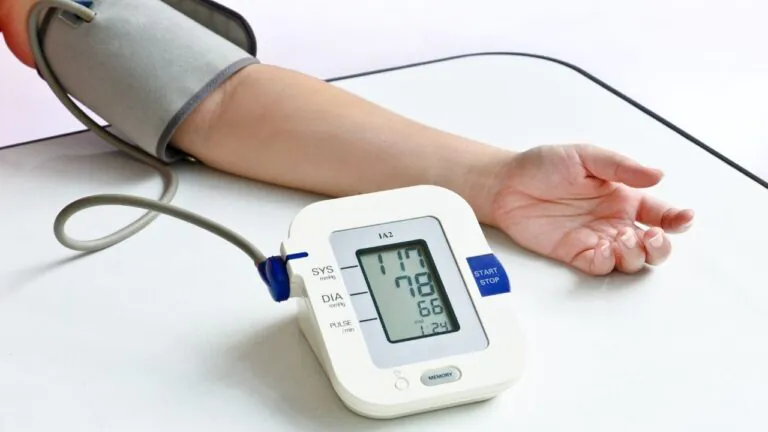
If the measurement reads 117 systolic and 78 diastolic, you would say, “117 over 78,” or write, “117/78 mmHg (millimeters of mercury).”
A normal blood pressure for an adult, is usually less than 120/80 mmHg. Please talk to your doctor or healthcare professional.


High blood pressure usually has no warning signs or symptoms, and many people do not know they have it. Measuring your blood pressure is the only way to know whether you have high blood pressure (3).
0%
Only are diagnosed and treated (2)
High blood pressure can damage your health in many ways. It can seriously hurt important organs like your heart, brain, kidneys, and eyes. (3)
Poorly controlled hypertension puts you at increased risk for cardiac disease (congestive heart failure, myocardial infarction, angina, left ventricular hypertrophy, and arrhythmias), cerebrovascular disease (stroke and cognitive decline), renal disease (chronic renal failure and dialysis), and vascular disease (accelerated atherosclerosis and retinopathy) (4)
It is important to detect hypertension as early as possible so the respective treatment can begin. If you have concerns about your risk or blood pressure numbers, talk to your doctor or healthcare provider.
0%
Only of people with hypertension have been diagnosed (4)
0%
Only of people with hypertension have controlled blood pressure (4)
How to prevent health burden?
The greatest gift you can give yourself and your loved ones is a healthy you. Take care of your body and focus on living the highest quality of life you can through your daily choices.
At Arcera, we have longstanding knowledge which we want to share with you. Explore our materials to raise your awareness and make decisions to stay healthy and improve your quality of life.
Know what causes high blood pressure?
- genetics (2)
- Unhealthy lifestyle – not enough physical activity, high-salt diet, drinking too much alcohol, etc. (2)
- Older age (2)
- Certain health conditions such as diabetes and obesity (3)
- Depression, anxiety, stress, or post-traumatic stress disorder over a long period of time (3)
How to keep your blood pressure at a healthy range? (6)
Practice healthy living habits to help prevent high blood pressure:
- Eat and drink healthy: The DASH (Dietary Approaches to Stop Hypertension) eating plan has proven record of helping people lower their blood pressure.
- Choose foods that rich in potassium, fiber, and protein and lower in salt (sodium) and saturated fat. For many people, making these healthy changes can help keep blood pressure low and protect against heart disease and stroke.
- Determine whether your weight is in a healthy range, as having overweight or obesity increases your risk for high blood pressure.
- Limit alcohol consumption.
- Be physically active:
- Get at least 2 hours and 30 minutes of moderate-intensity exercise, such as brisk walking or bicycling, every week. That’s about 30 minutes a day, 5 days a week.
- Quit or never start smoking.
- Get enough sleep
- Manage stress
Measure your blood pressure regularly to detect any health problems early.
You can get your blood pressure checked (5):
- By a healthcare professional at a doctor’s office.
- At a pharmacy that has a digital blood pressure measurement machine.
- With a home blood pressure monitor that you can use yourself.
However, be aware that many things can affect a blood pressure reading, including nervousness, what you ate, drank or did before your reading, and even how you are sitting. It is therefore important to get an accurate blood pressure reading so that you have a clearer picture of your risk. (5)
If a health care professional diagnoses you with high blood pressure, talk with your health care team about your blood pressure levels and how they affect your treatment plan. (3)
Kindly find below a printable leaflet for you, which will help you:
- Learn the correct way to measure blood pressure
- Prepare you for your first blood pressure visit
- Keep track of your blood pressure checks at home
Download Leaflet – Manage Blood Pressure
Take your medicine (6).
Talk with your doctor or healthcare professional about the best type of treatment for you. You may need to take more than one type of medicine to control your blood pressure. Blood pressure medicines can work several different ways. Blood pressure medicines can keep blood pressure at a healthy level by:
- Causing your body to get rid of water, which decreases the amount of water and salt in your body to a healthy level
- Relaxing your blood vessels
- Making your heartbeat with less force
- Blocking nerve activity that can restrict your blood vessels
It is important to take your blood pressure medicine exactly as your doctor tells you to. Do not stop taking your current medicine without talking to your doctor or pharmacist first.
Download our educational poster*, and spread the word:
Join us on Facebook and let’s talk cardiovascular diseases.
Last update: 24 March 2026
(GLO-CVM-03/2026-1)
References
1. World Health Organization Health Topics, Hypertension. Accessed 24 March 2026
2, World Health Organization fact sheets, Hypertension. Published 25 September 2025, Accessed 24 March 2026
3. Centers for Disease Control and Prevention, About High Blood Pressure | High Blood Pressure | CDC. Accessed 24 March 2026
4. Edwards EW, Saari HD, DiPette DJ. Inadequate hypertension control rates: A global concern for countries of all income levels. J Clin Hypertens (Greenwich). 2022 Mar;24(3):362-364. doi: 10.1111/jch.14444. Epub 2022 Feb 24. PMID: 35199940; PMCID: PMC8924991.
5. Centers for Disease Control and Prevention, Measuring Your Blood Pressure | High Blood Pressure | CDC, Accessed 24 March 2026
6. Centers for Disease Control and Prevention, Managing High Blood Pressure | High Blood Pressure | CDC , Accessed 24 March 2026
* Downloadable materials
This material is intended solely for the general information. It is not to be used for treatment or diagnostic purposes, but rather for discussion with the patient’s own physician. The information contained herein is neither intended to dictate what constitutes reasonable, appropriate or best care for any given health issue, nor is it intended to be used as a substitute for the independent judgment of a physician.